


Your boiler is running. The thermostat is set. But one or more radiators are barely warm, cold at the top, or not heating at all. This is the single most common heating complaint we see in Edinburgh homes, and it rarely means the boiler is broken.
The cause is almost always inside the radiator or the pipework connected to it. Here are the 6 most common reasons your radiators are not heating up properly, what you can check yourself, and when the problem needs a heating engineer.
Read the radiator before you do anything else
How the radiator feels tells you the cause. Touch it carefully when the heating has been on for 15 minutes and note the pattern:
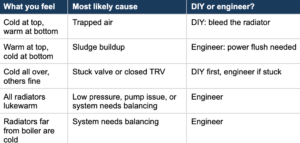
6 reasons your radiators are not heating up
- Trapped air inside the radiator
Air enters the system naturally over time and rises to the top of each radiator. It creates a pocket that blocks hot water from filling the full panel. You hear gurgling or hissing. The radiator feels cold at the top and warm at the bottom. Bleeding the radiator releases the air. Use a radiator key, turn the bleed valve a quarter turn anticlockwise, and close it as soon as water flows steadily. Check boiler pressure afterwards, as bleeding drops it slightly.
- Sludge and debris buildup
Rust particles, dirt, and magnetite (black iron oxide sludge) build up inside radiators over years. The debris settles at the bottom, blocking water flow. The radiator feels hot at the top and cold at the bottom. This is common in Edinburgh’s older tenement properties where cast iron radiators and original copper pipework have been in service for decades. The fix is a professional power flush or chemical clean, followed by fitting a magnetic filter (such as an ADEY MagnaClean) to catch debris before it settles.
- Stuck thermostatic radiator valve (TRV)
TRVs control the flow of hot water into each radiator. The internal pin that opens and closes the valve can seize after months of inactivity, especially over summer. The radiator stays cold even with the TRV turned to maximum. Remove the TRV head (it unscrews or unclips), and gently press the exposed pin up and down with a blunt object. If it moves freely, refit the head. If it is completely stuck, the valve needs replacing.
- System needs balancing
Balancing means adjusting the lockshield valve on each radiator so hot water distributes evenly across the whole system. Without balancing, radiators closest to the boiler get all the hot water first. Radiators furthest away stay lukewarm or cold. This is a common issue in Edinburgh’s multi-storey tenement flats where the boiler sits in the kitchen and radiators run through 3 or 4 rooms along the hallway. Balancing requires a digital thermometer and patience. Most homeowners prefer an engineer for this job.
- Low boiler pressure
When boiler pressure drops below 1.0 bar, there is not enough force to push hot water through every radiator. The system underperforms. Radiators furthest from the boiler suffer first. Check the boiler pressure gauge. If it reads below 1.0 bar, repressurise via the filling loop to 1.2 bar. If pressure keeps dropping, that is a separate issue.
- Faulty circulating pump
The pump pushes heated water from the boiler through the pipework and into each radiator. When the pump fails, runs at the wrong speed, or becomes clogged with sludge, water circulation drops. All radiators will be affected, not just one. You may hear the pump humming or making unusual noises. This is an engineer-only fix.
What you can fix yourself (and when to stop)
Three of the six causes above have a safe DIY fix:
- Bleed the radiator to release trapped air. Always check boiler pressure after.
- Free a stuck TRV pin by removing the head and gently pressing the pin. Do not force it.
- Top up boiler pressure via the filling loop to 1.2 bar. If pressure drops again within a few days, stop topping up and book an engineer.
Stop and call a Gas Safe registered engineer for sludge removal, system balancing, pump faults, or any issue you are not comfortable diagnosing. Heating systems operate under pressure and incorrect repairs create safety risks.
Why Edinburgh properties have more radiator problems
Edinburgh’s housing stock creates specific radiator challenges. Victorian and Edwardian tenement flats in Marchmont, Bruntsfield, Stockbridge, and Leith often have heating systems installed decades after the building was constructed. The pipework follows long, indirect routes through thick stone walls and under original floorboards.
These long pipe runs increase the distance hot water travels from the boiler to the furthest radiator. Without proper balancing, the radiators in the front rooms get hot while the bedroom radiator at the end of the run stays lukewarm.
Older cast iron radiators also hold more water volume and take longer to heat than modern steel panel radiators. Combined with original copper pipework that has accumulated sludge over 30 or 40 years, these systems benefit significantly from a power flush and a magnetic filter installation.
Newer builds in South Queensferry, Craigmillar, and Granton use modern steel radiators, plastic push-fit pipework, and shorter runs. Radiator problems in newer properties are more often caused by trapped air or TRV issues than sludge.
How to prevent radiator problems long term
- Annual boiler service. Your engineer checks the pump, pressure, and system performance during a service. Issues get caught before they cause cold radiators in winter.
- Magnetic filter. A filter like an ADEY MagnaClean catches sludge and debris before it settles in radiators. Fitted to the return pipe near the boiler, it protects the whole system.
- Corrosion inhibitor. A chemical inhibitor added to the system water slows rust and sludge formation. Your engineer tops this up during a service.
- Turn TRVs in summer. Turn each TRV valve from minimum to maximum and back once a month during summer. This prevents the pin from seizing during months of inactivity.
Common Questions our Team gets for Heating Repair Service:
Why is my radiator cold at the top?
Trapped air inside the radiator is the most common cause. Air rises to the top and blocks hot water from filling the full panel. Bleeding the radiator with a radiator key releases the air. Check boiler pressure afterwards and top up if it has dropped below 1.0 bar.
Why are some radiators hot and others cold?
The heating system needs balancing. Hot water flows to the nearest radiators first, leaving less flow for those further from the boiler. A heating engineer adjusts the lockshield valves on each radiator to distribute water evenly across the system.
How do I balance my radiators?
Balancing involves turning the lockshield valve on each radiator to control the flow rate. Start with the radiator closest to the boiler, restrict its flow slightly, and work outwards. You need a digital thermometer to measure the temperature difference across each radiator. Most homeowners hire a heating engineer for this.
Do I need a power flush?
A power flush is necessary when sludge has built up inside radiators and pipework. Signs include radiators that are hot at the top and cold at the bottom, black water when you bleed a radiator, and noisy pipes. A power flush clears the debris and restores full circulation. Fitting a magnetic filter afterwards prevents the problem returning.
Professional Boiler Installation in Edinburgh
Gas Safe registered engineers provide essential boiler installation services across Edinburgh. C1 Boilers offers manufacturer-accredited installation with transparent pricing, comprehensive warranties, and professional service throughout Edinburgh.